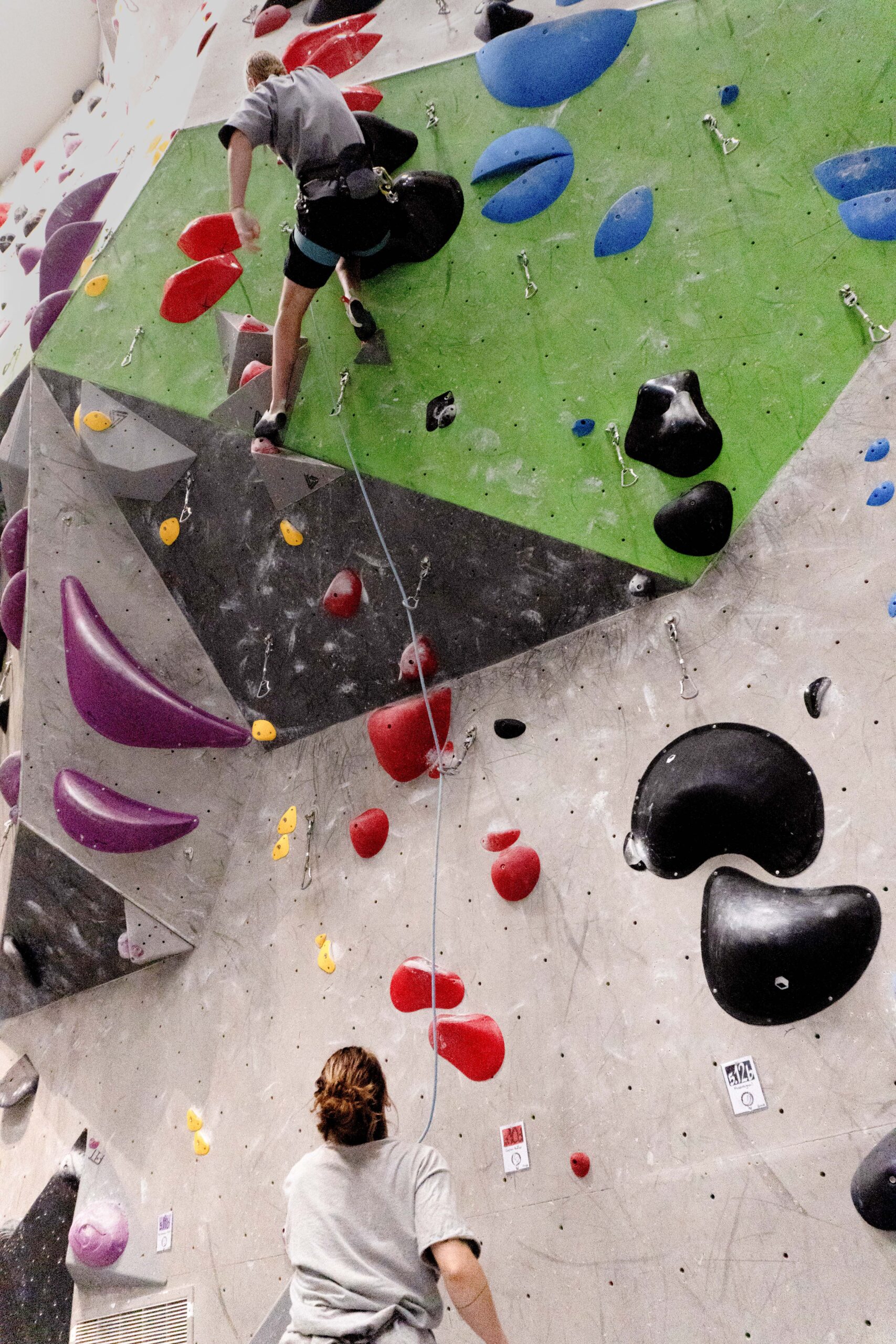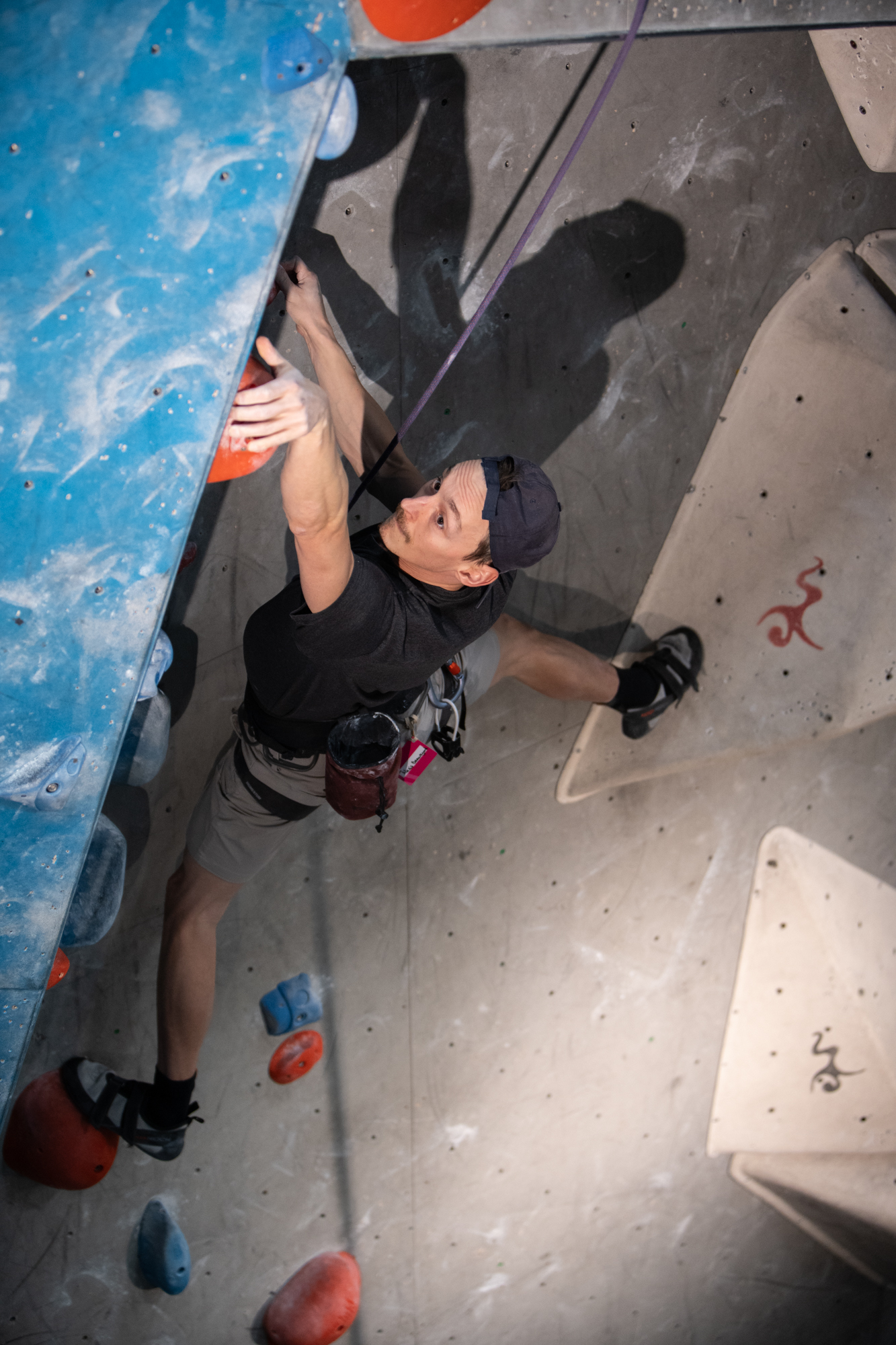
One of the main challenges I face when leading is the fear of falling. Everything goes smoothly until the thought of falling before clipping the next quickdraw creeps into my mind. At that moment, my body freezes, stress builds, and I lose all my composure. The result: a route I can handle perfectly top-roping turns into a real challenge when leading.
This fear has deep psychological roots, linked to our survival instinct. When faced with a perceived threat, our system instinctively seeks ways to minimize risks and increase our chances of survival. These mechanisms manifest themselves both in our brains and in our behavior. Our instinctive reactions can fall into three categories: fight, flight, or freeze to remain unnoticed. In my case, I freeze, hoping my quickdraws will clip themselves.
This fearful situation triggers the release of stress hormones, as well as a physiological response that makes us aware of our anxiety. This is when the emotional experience becomes conscious: we realize that we are afraid. If this sensation occurs too often, it risks becoming ingrained in our memories and becoming associated with the activity itself, which can, in the long run, erode our confidence.
However, when we manage to overcome that fear by reminding ourselves that we’re properly roped in and that the risk of injury is minimal, a calming effect sets in. By facing our fears in a controlled manner, within a safe environment, our brain releases reward hormones, such as dopamine and endorphins. These substances transform our initial stress into a sense of relief, or even pleasure. In fact, once I’m back down, I always feel a great sense of pride at having made it to the top of the wall.
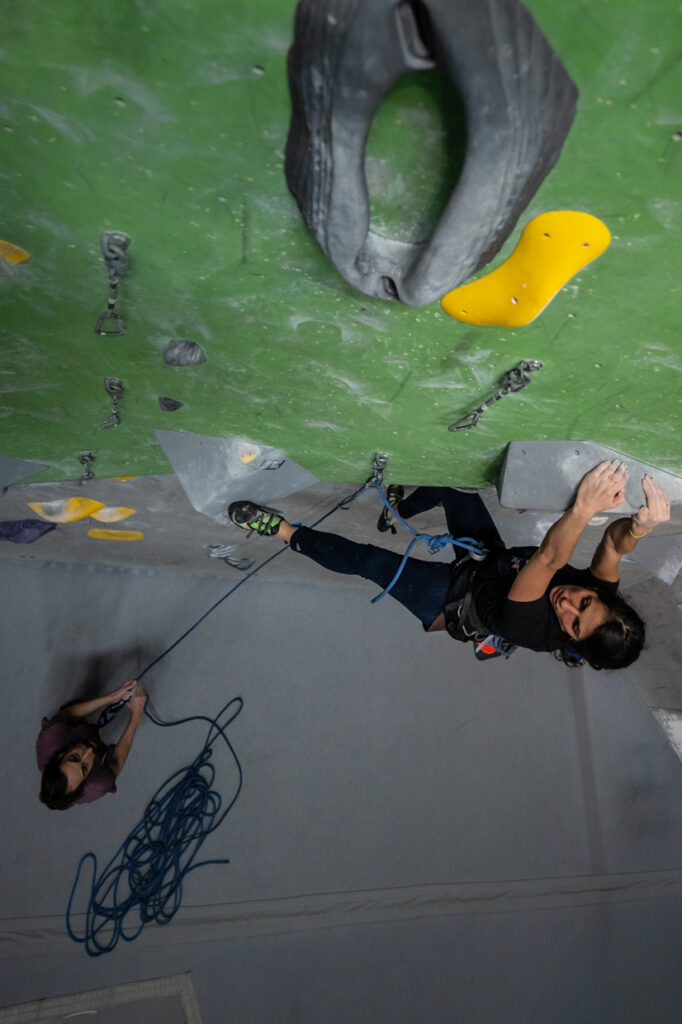
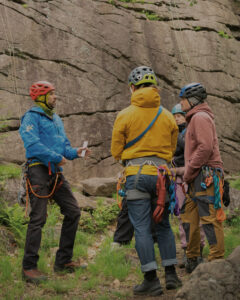
This fear is completely normal, and the key is to find a balance. For example, when climbing outdoors on an overhang, it’s best to be aware of the actual risk and to climb or belay with caution to avoid injury. This fear is healthy and instinctive. However, during our regular session at Zero Gravity, it shouldn’t become a limiting thought that undermines our self-confidence and fuels negative thoughts like, “I’m going to make a fool of myself by falling on this move.”
Mindfulness practice can help us become aware of these physical reactions and understand that they are simply linked to stress and fear. It then becomes easier to remind ourselves that we are safe, that falling is part of the learning process, and that our partner is there to protect us. Once we recognize this fear, it becomes easier to overcome it later on.
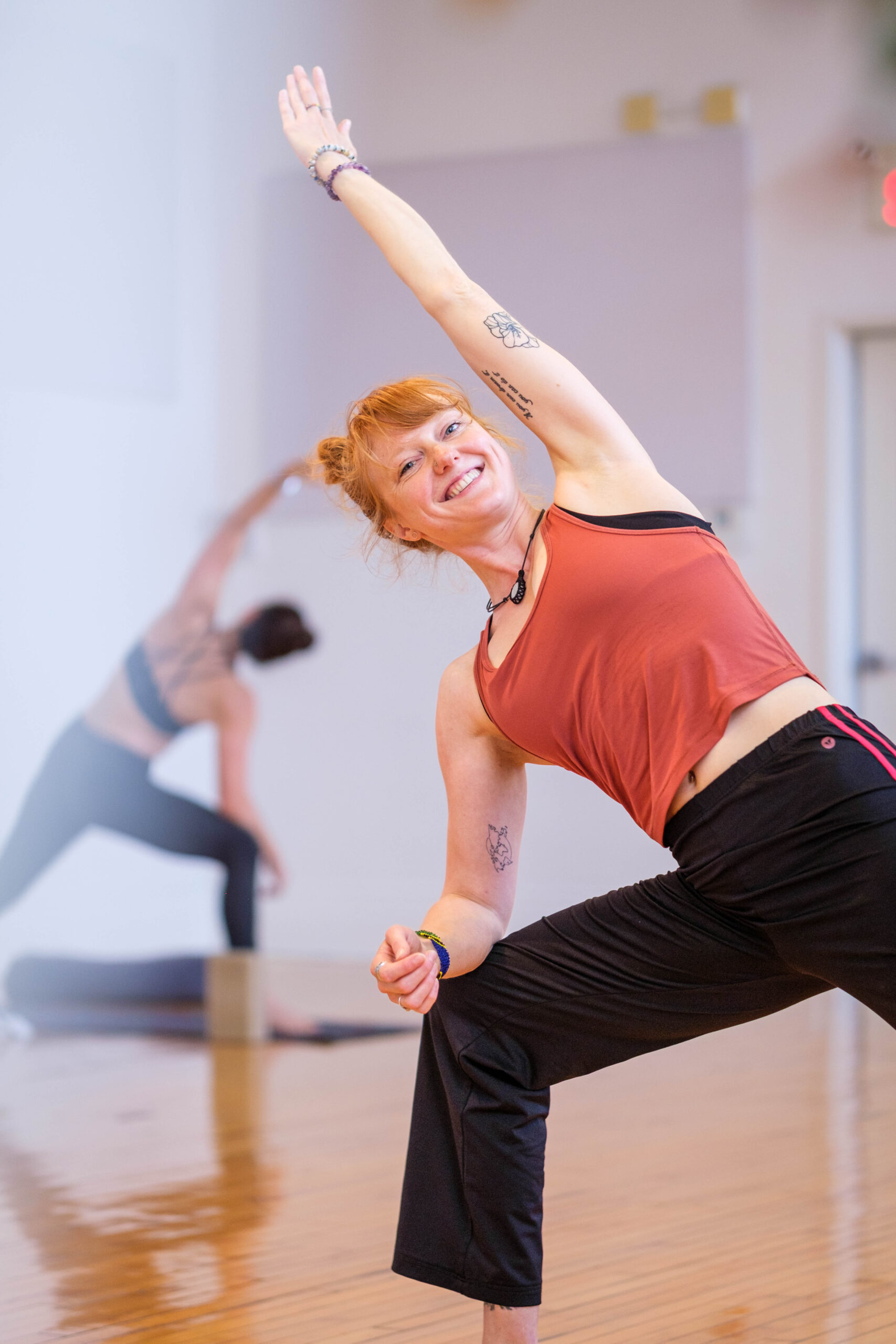
Breathing exercises are also valuable tools for calming our heart rate and refocusing our attention on our footing rather than on the void. Let’s draw inspiration from yoga for these exercises. For example, Nadi Shodhana (alternate nostril breathing) helps calm the mind before a difficult route. Sama Vritti (square breathing) involves inhaling, holding your breath, exhaling, and keeping your lungs empty for the same duration—for example, four seconds at each stage—which is particularly useful during technical sections. Finally, Vinyasa synchronizes movement and breathing: you inhale as you prepare a hold, and exhale as you push off.
These breathing exercises help you avoid common mistakes, such as holding your breath during exertion—which increases the risk of muscle tension—or breathing too quickly, which can lead to a loss of control.
Another tip is to use positive affirmations that make you feel good, such as: “I’ve done this move before, I can hold this hold” or “I’m letting go, I’m safe.”
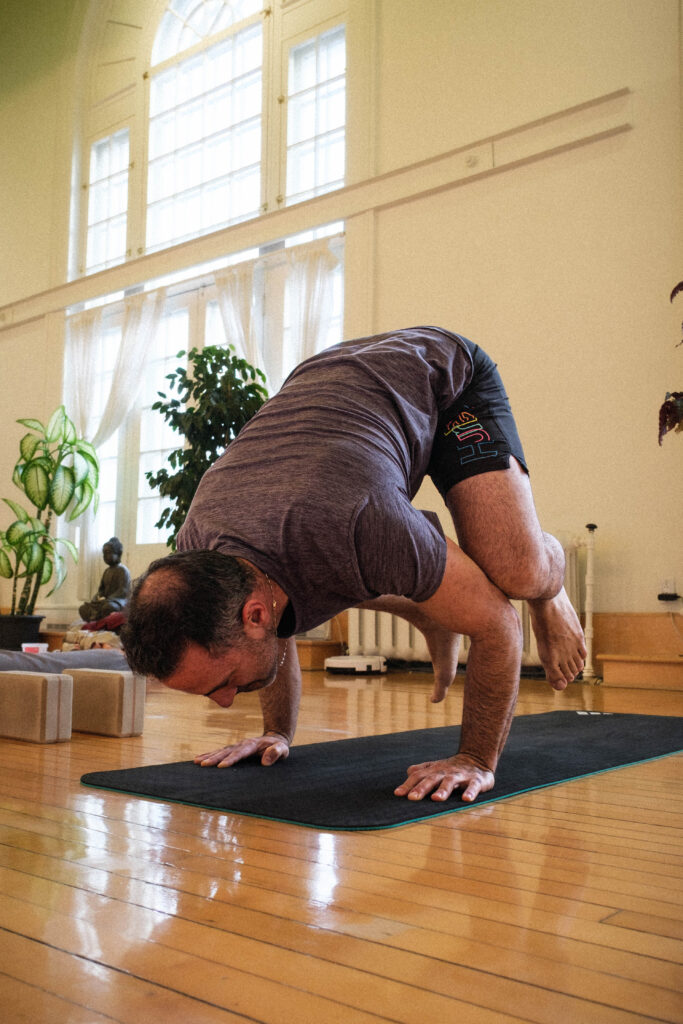
Handstand exercises, such as those practiced in Ashtanga yoga classes, can also help us get used to the idea of falling and stay in control of ourselves and our coordination.
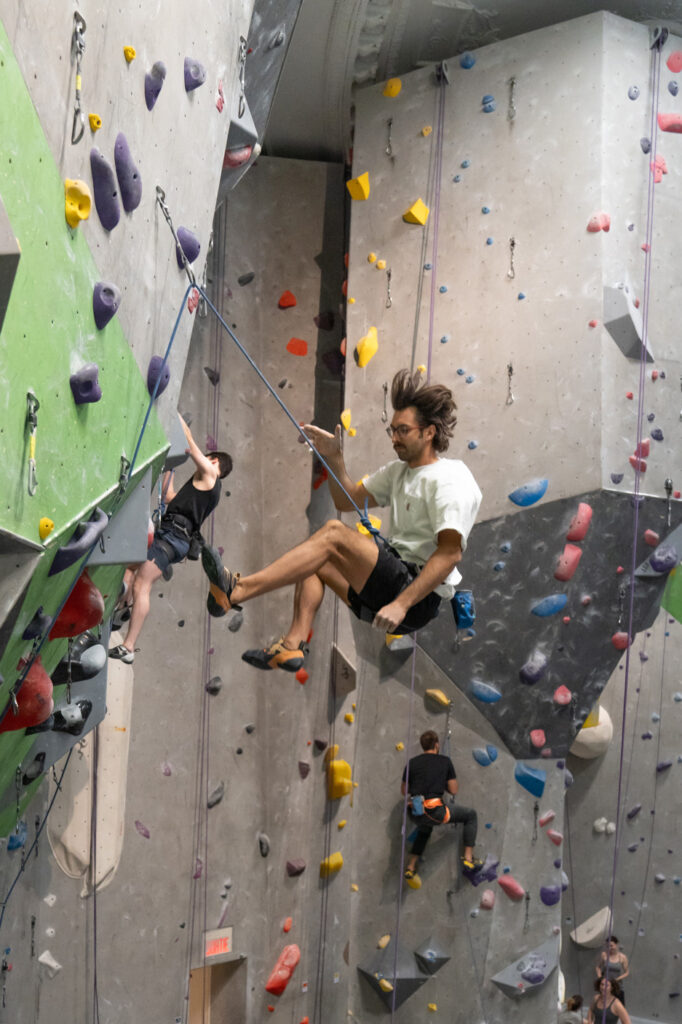
And if all these tips aren’t enough to ease your fear of falling, there’s one final exercise—perhaps the most important one: practice falling with your climbing partner.
This helps build trust and communication, not only with your partner but also with yourself. Starting at the fifth quickdraw, you can practice taking increasingly committed falls. Once you feel comfortable, you can move on to less prepared falls, for example at the end of each route or after each quickdraw (always after the fifth for safety reasons). It’s best to practice this exercise several times per session, rather than cramming it all into a single session.
A few important reminders: it’s essential to take your partner’s weight and flexibility into account. To fall properly or add momentum to a fall, don’t lean back or curl up; instead, fall backward or “flat.” Also, remember to adjust the momentum of your falls based on weight differences.
We may experience minor or major falls, which trigger a fear response in us, regardless of their severity. In such cases, it is essential to regain confidence in ourselves and our climbing partner so that we can view this risk as simply part of the experience. The goal isn’t to reinforce your fears by forcing yourself to immediately return to the route that caused the fall, but rather to equip yourself to prove that you can overcome this challenge. Don’t hesitate to ask staff members for advice to help you through this process.
References:
Z Health Education. (n.d.). Fear of falling causes falls: a key exercise to overcome fear. zhealtheducation.com
Lecrux, P. (November 15, 2023). What happens in our brains when we’re afraid. The Conversation. theconversation.com